The story isn't the product. It's the roster.
On June 22, 2026, a Tokyo lab called Sakana AI shipped Fugu and Fugu Ultra.
That same week, Anthropic's two most powerful models — Fable 5 and Mythos — got their access tightened under export controls.
Put those two facts next to each other and you get the only sentence that matters right now:
When frontier access starts getting restricted by geography, the "second-best but actually reachable" supplier gets repriced overnight.
Everyone is arguing about Fugu's benchmarks. They're missing the more interesting question — who built this, and where did they come from?
Here's the roster, verified person by person.
What Fugu actually is
Fugu exposes one thing to the outside world: a single OpenAI-compatible API.
But underneath, it isn't one big model. It's a commander model — trained to decide whether a task should be answered directly, broken apart, or handed to specialist models in a pool, then verified and synthesized back into one answer.
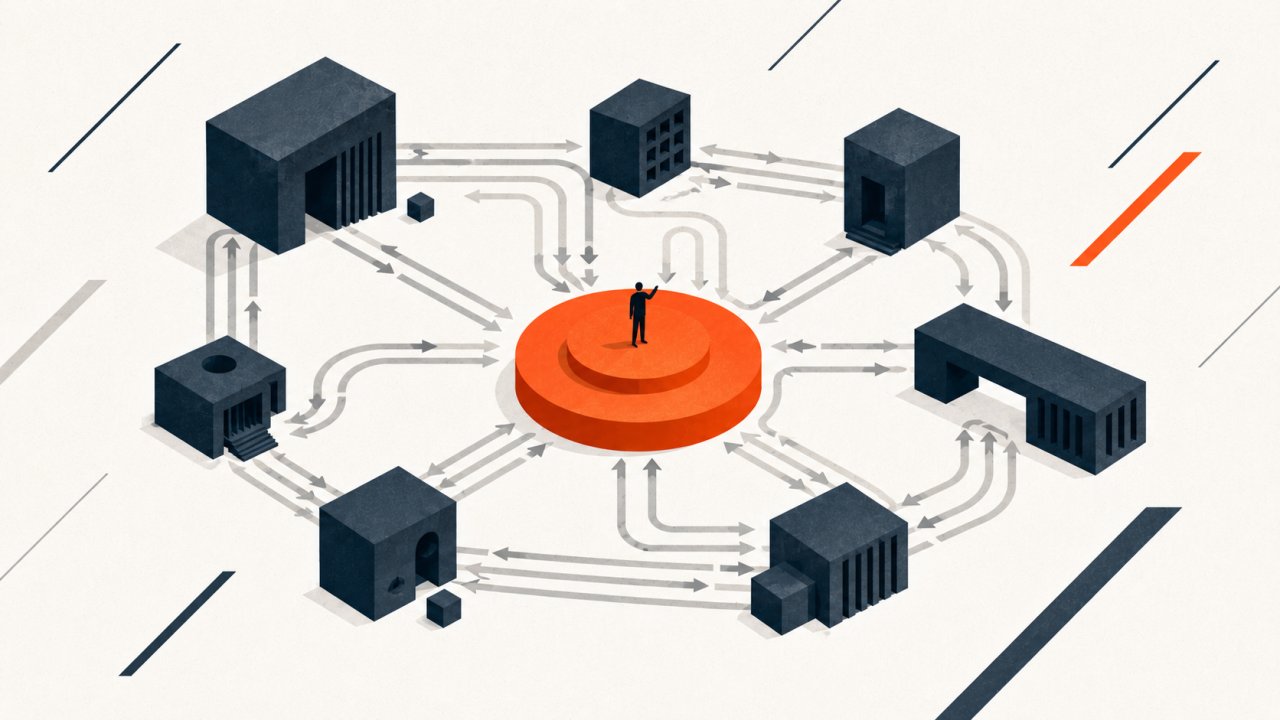
In Sakana's own words: Fugu is itself a language model, trained to call other models in an agent pool — including instances of itself, recursively.
The architecture rests on two ICLR 2026 papers — TRINITY (a lightweight coordinator that assigns Thinker / Worker / Verifier roles on the fly) and The Conductor (using reinforcement learning to learn the routing strategy instead of hand-coding rules).
Sakana's headline claim: Fugu Ultra stands shoulder-to-shoulder with Fable 5 and Mythos Preview across the hardest engineering, science, and reasoning benchmarks.
The twist that makes the whole thing land: those two models aren't even in Fugu's pool — because they're the ones you can't reliably get.
A caveat the hype skips: the benchmark numbers are self-reported and still waiting on third-party replication. And the loudest question on X all week has been the obvious one — is this a genuinely new orchestration architecture, or a very well-dressed router?
That debate isn't settled. But one thing isn't in dispute: Fugu is the first product to package multi-agent orchestration into a single callable API.
The roster: this team did not appear out of nowhere
Act one — three founders, three different doors into the same room.
-
David Ha (CEO) — former head of Google Brain's Tokyo research team. Time100 AI 2025.
-
Llion Jones (CTO) — a co-author of "Attention Is All You Need." Yes, that paper. One of the people who gave the world the Transformer is now building the thing meant to sit on top of it.
-
Ren Ito (Chairman) — University of Tokyo law, former Japanese diplomat at the Foreign Ministry, ex-Mercari exec, former COO of Stability AI.
Read those three lines together and you see what most early-stage teams don't have all at once: a technical pedigree (Google Brain), the architecture's bloodline (Transformer originals), and a built-in channel for regulation and compliance (a career diplomat). In a world being reshaped by export controls, that last one is not decoration.
Act two — the founding research team, suspiciously concentrated.
Takuya Akiba (creator of Optuna, ex–Preferred Networks VP). Yujin Tang (ex–Google Brain / DeepMind). Robert Lange (ex-DeepMind, evolutionary computation, core to The AI Scientist). Tarin Clanuwat (ex–Google Brain / DeepMind, known for using deep learning to restore ancient Japanese texts). And more.
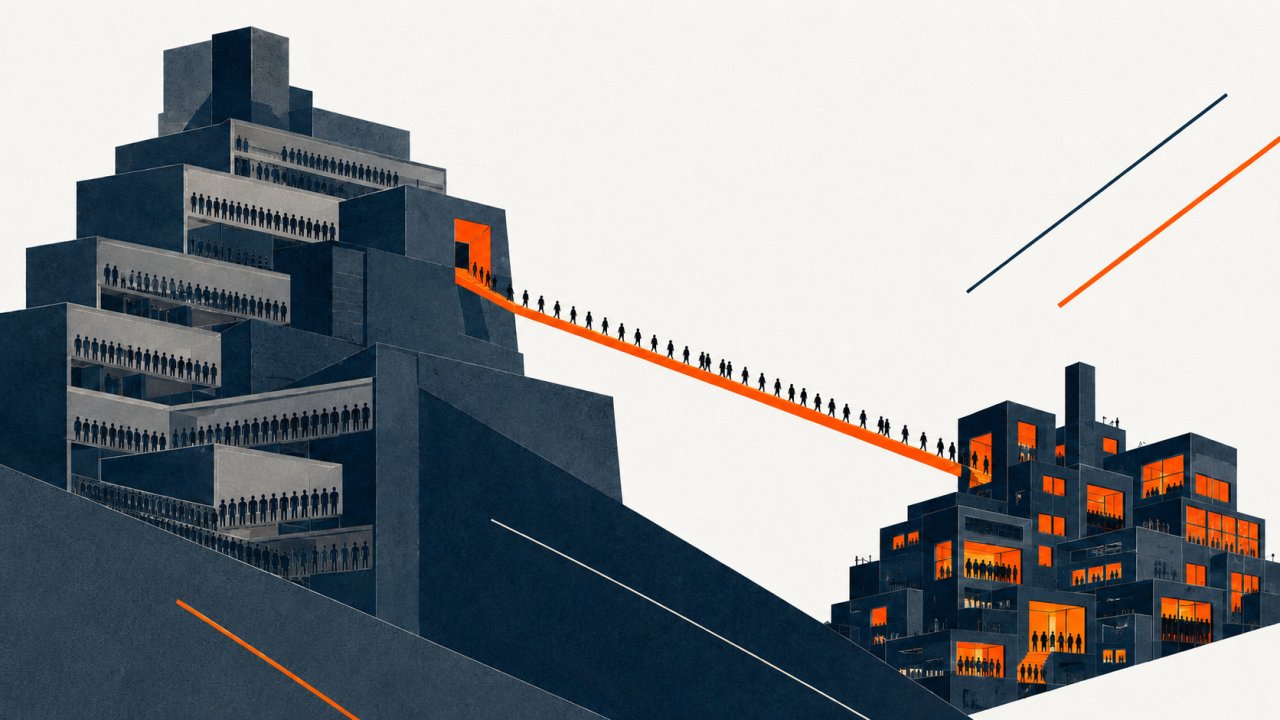
Two phrases repeat across these bios over and over: "ex–Google Brain / DeepMind" and "The AI Scientist." When the same two keywords keep surfacing in a roster, that's not noise — that's the signal that tells you the team has one continuous technical thesis, not a grab-bag of hires.
Act three — the line that connects everything: AI that does its own science.
The AI Scientist was Sakana's project to let an AI run the full loop — pick a problem, run experiments, write the paper. In 2025, one of its generated papers cleared double-blind peer review at an ICLR workshop: the first fully AI-written paper known to survive the process. (Fair limits, stated plainly: workshop track, not the main conference; one acceptance out of three submissions; and the team had pre-agreed to withdraw even if accepted.) In March 2026, a human-written paper describing that system landed in Nature.
Now look at Fugu. Its core trick is a model that orchestrates other models. That's not a pivot from "an AI that runs its own research loop." It's the same idea, productized.
Why Tokyo matters: scarcity is its own premium
For several generative-AI cycles, Japan sat in a strange gap — strong on papers, absent from the conversation about globally top-tier products.
Which hands Sakana an extra variable most labs don't get: the market carries a built-in attention premium for a frontier-class product that isn't from the US or China — a premium that exists independent of the model's actual capability.
So be honest about the hype: the attention on Fugu is not the same thing as endorsement of its numbers. Part of what you're watching is the market pricing the scarcity of where supply comes from.
Three signals worth more than the benchmark table
- Top AI talent is going multipolar. Google Brain / DeepMind was the reservoir for a decade. This roster shows it leaking — and not just sideways within Silicon Valley. There's now a cross-geography path, and Tokyo is one observable destination.
- Export controls are rewriting what "availability" is worth. Fugu's whole "we match the models you can't get" pitch detonated this week not because of the digits, but because it landed precisely on the moment frontier access got restricted. The lesson: reliability of access is becoming a variable that sits next to performance — not beneath it.
- Small, contrarian teams can still break through. A few dozen people. A ~$2.6B valuation. A bet against the entire industry consensus of "just scale one giant model," in favor of "orchestration beats monoliths." This launch is the first time that contrarian line got tested in the main arena. Whether it holds is a question for the next several benchmark cycles.
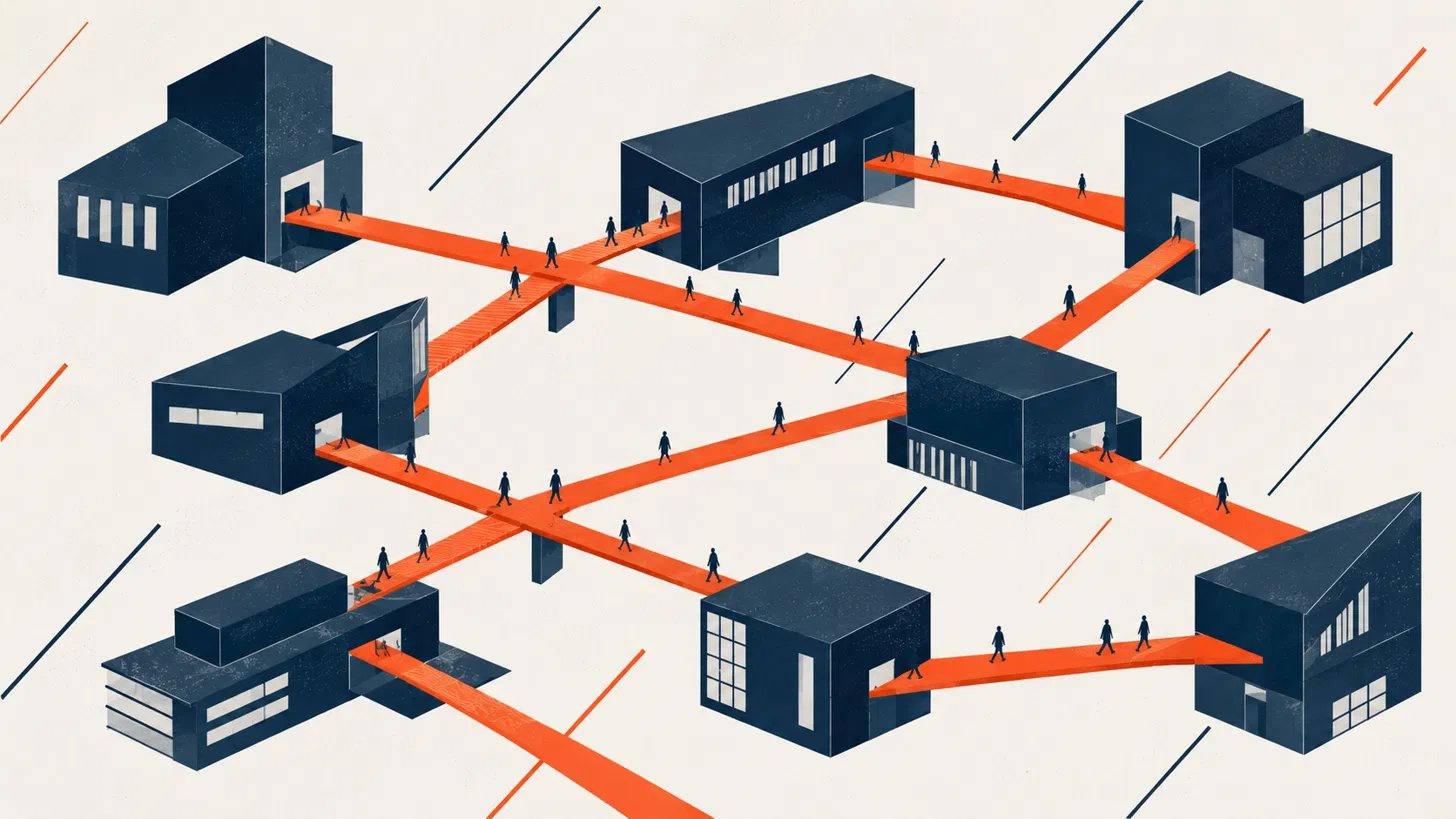
The old question was who owns the strongest model.
When capability starts getting fenced in by geography, that's no longer the only question.
The new one is: who can still reliably reach them.
Team-graph data verified person-by-person via DINQ talent intelligence. Fugu / Fugu Ultra technical details from Sakana AI's official release (June 22, 2026) and public reporting; benchmark figures are largely vendor-reported and partly await third-party verification — contested points are flagged in the text.