Searching for AI engineers, researchers, and builders is no longer a simple keyword problem. Modern AI hiring requires structured discovery across publications, projects, code, and cross-border professional signals.
At DINQ, we are building an AI talent search platform designed specifically for the next generation of AI professionals — and our infrastructure layer is powered by Supabase.
Why traditional AI hiring platforms fall short
Most recruitment platforms were not designed for AI-specific roles with limitations such as keyword-based search that misses semantic meaning, resume-centric data structures, limited visibility into research output, and fragmented candidate signals
For example, searching for "LLM research" may not surface a candidate deeply involved in transformer optimization unless the exact keyword appears.
In AI recruitment, that's a major failure. AI professionals rarely fit into neat categories. Their work spans research papers, code repositories, open-source contributions, startup experiments, and cross-border collaborations. These signals live in different places and evolve quickly.
To build a meaningful AI talent database, we needed a system that treats professional identity as structured, evolving data — not just uploaded files.
How DINQ enables semantic AI talent search
DINQ is not a resume filter layered with keywords.
It is a structured discovery system designed specifically for AI engineers, researchers, and technical builders.
Profiles on DINQ are modeled as structured identity objects. Projects, research directions, technical stacks, and experience are organized in a way that can be queried intelligently. This enables more meaningful search results than simple title matching.
Instead of asking, "Does this keyword appear?" the system can better interpret, "Is this person actually working in this domain?"
This distinction is subtle but critical in AI hiring. DINQ allows recruiters, labs, and founders to search AI engineers by domain expertise, discover emerging researchers outside major brand-name labs, and identify candidates aligned with specific AI subfields
A recruiter searching for expertise in reinforcement learning should not miss a candidate simply because the phrasing differs. A lab looking for emerging LLM researchers should be able to discover people outside the most visible institutions.
That requires semantic-aware retrieval built on structured data. And that requires infrastructure capable of supporting it.
The result is a more precise AI hiring workflow.
Why we built on Supabase
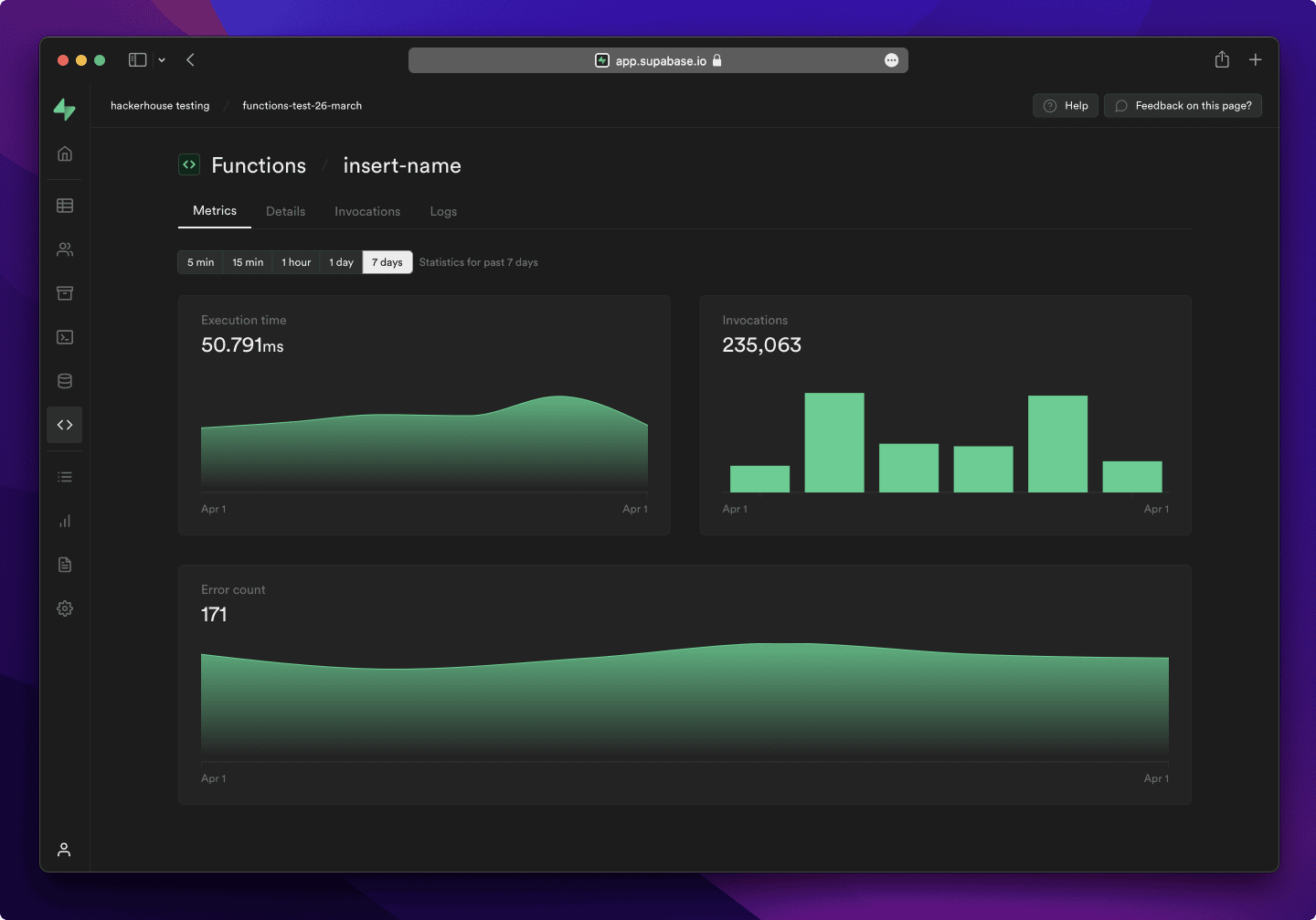
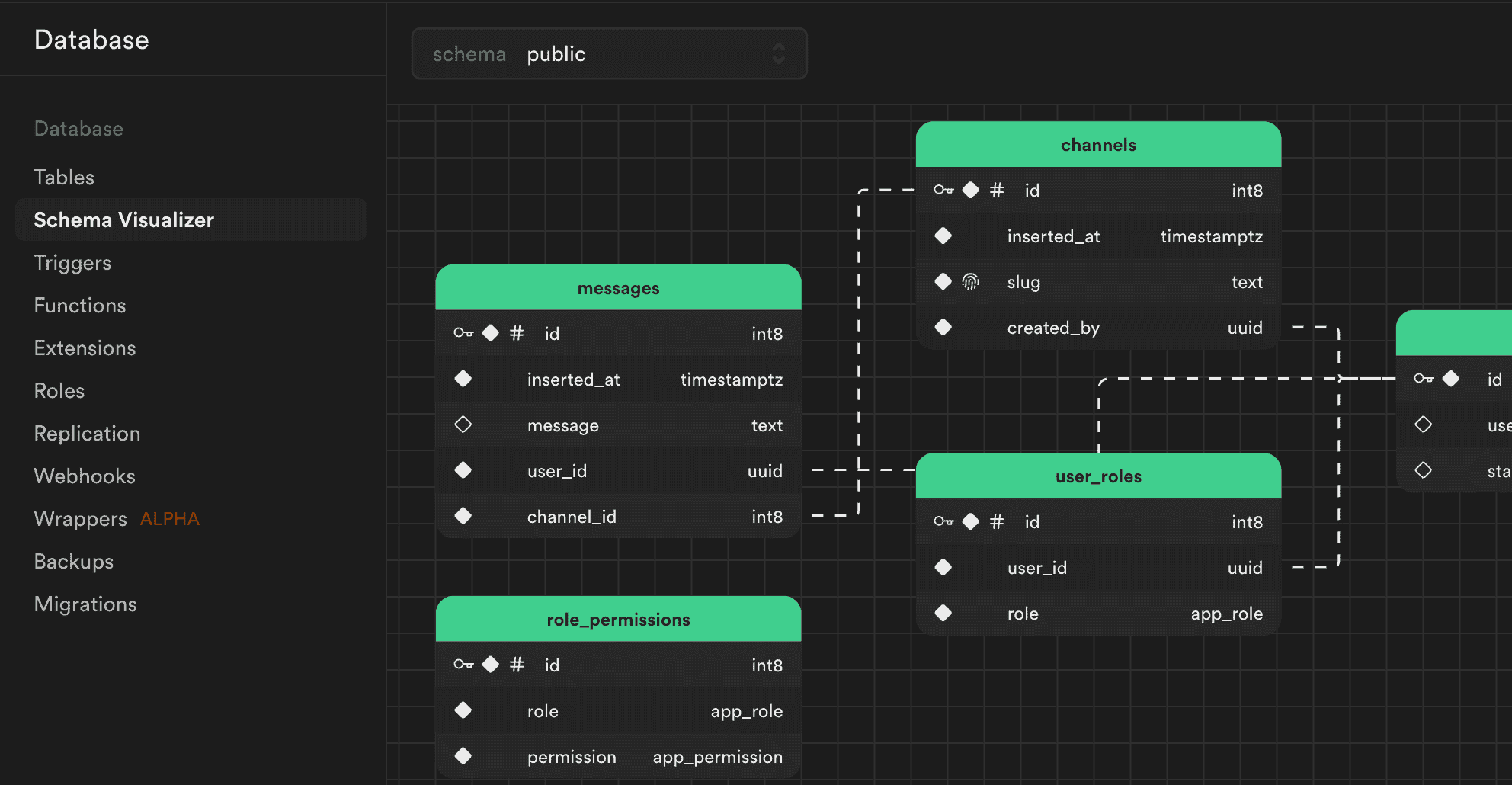
Supabase provides a managed PostgreSQL backend with real-time capabilities and secure authentication. More importantly for us, it offers flexibility.
As AI subfields expand and new specialization categories emerge, our data model must evolve. New attributes need to be added. Search logic needs to adapt. Ranking systems need refinement.
Supabase gives us a relational core that is stable, while remaining flexible enough to support continuous iteration. That balance matters when your product sits at the intersection of research, hiring, and global collaboration.
The future of AI talent discovery
When people use DINQ to search for AI talent, the experience feels simple: Type a query. Explore structured profiles. See real work, clearly presented.
What's less visible is the infrastructure that makes this possible.
As DINQ grows into a global AI talent search platform, the reliability of our data layer becomes as important as the intelligence on top of it. That's why we chose Supabase as the foundation of our backend architecture.
AI is evolving quickly. So are the signals that define expertise. As DINQ expands, we are continuing to refine our search ranking, improve structured identity modeling, and support more granular specialization across the AI ecosystem.